Food checkweighers that support pack compliance and control giveaway
Inspect every finished pack for underweight and overweight conditions while giving production teams a live view of process drift. Systems can be configured for open or wrapped food, dry or wet areas, and straightforward or frequent product changeovers.
Separate three causes of weight variation
A food checkweigher measures the moving finished pack. A spread of readings can arise from real differences in product quantity, packaging tare or the way packs travel over the weighing conveyor. Identify these causes separately before changing fill settings or acceptance limits.
1. Establish repeatability with a stable pack
Pass an agreed stable reference pack through the normal transfer and weighing sequence repeatedly. Record line speed, spacing and the test conditions. This gives a comparison point for investigating the measurement process; it does not reproduce every behaviour of an open tray, flexible pouch or liquid-filled tub.
2. Introduce normal production variation
Assess the actual product at representative temperatures and fill conditions, using packaging from the normal supply range. Record pack shape, surface moisture and any movement of the contents. A tray that rocks or a pouch that overlaps its neighbour can create a different problem from genuine underfilling.
3. Challenge the production decision
Use controlled examples near the agreed weight boundaries and confirm the classification of each. Follow failed packs to the reject destination and check what happens when failures arrive consecutively or removal is not confirmed. Keep test-product identity and disposition within the site's quality procedure.
Match access and cleaning to the real food zone
State whether the product is exposed, lidded or sealed, how equipment is cleaned and which contact areas require access. Review belt removal, retention points, splash and drainage with the hygiene team. A material description or electrical protection rating alone does not describe the whole cleaning arrangement.
Keep trend control distinct from pack rejection
A single pack outside a limit requires the defined inspection response. A sustained change in a suitable sample of weights may justify a controlled filler correction. Investigate changes in packaging, product condition and measurement stability before enabling automatic feedback. Agree correction limits, delay and the response when usable data is lost.
Continue with reject-system design, cleaning arrangements or filler-feedback control, according to which decision remains unresolved.
Food checkweigher specification inputs
- Pack format, dimensions, target weight and permissible variation
- Whether product is open, lidded, wrapped or fully sealed
- Dry wipe-down, low-pressure wash or more demanding cleaning regime
- Line speed, pitch and upstream product-spacing control
- Required reject containment and rework procedure
- Metal-detection, x-ray, coding or label-inspection interfaces
- Filler feedback and production-reporting requirements
Link final inspection to the filling process
A checkweigher can do more than remove non-conforming packs. When its rolling weight trend is fed back to compatible filling equipment, small corrections can help keep the process centred on target. The control philosophy should use an appropriate sample window, limits and safeguards so normal product variation does not cause unstable adjustment.
Typical applications
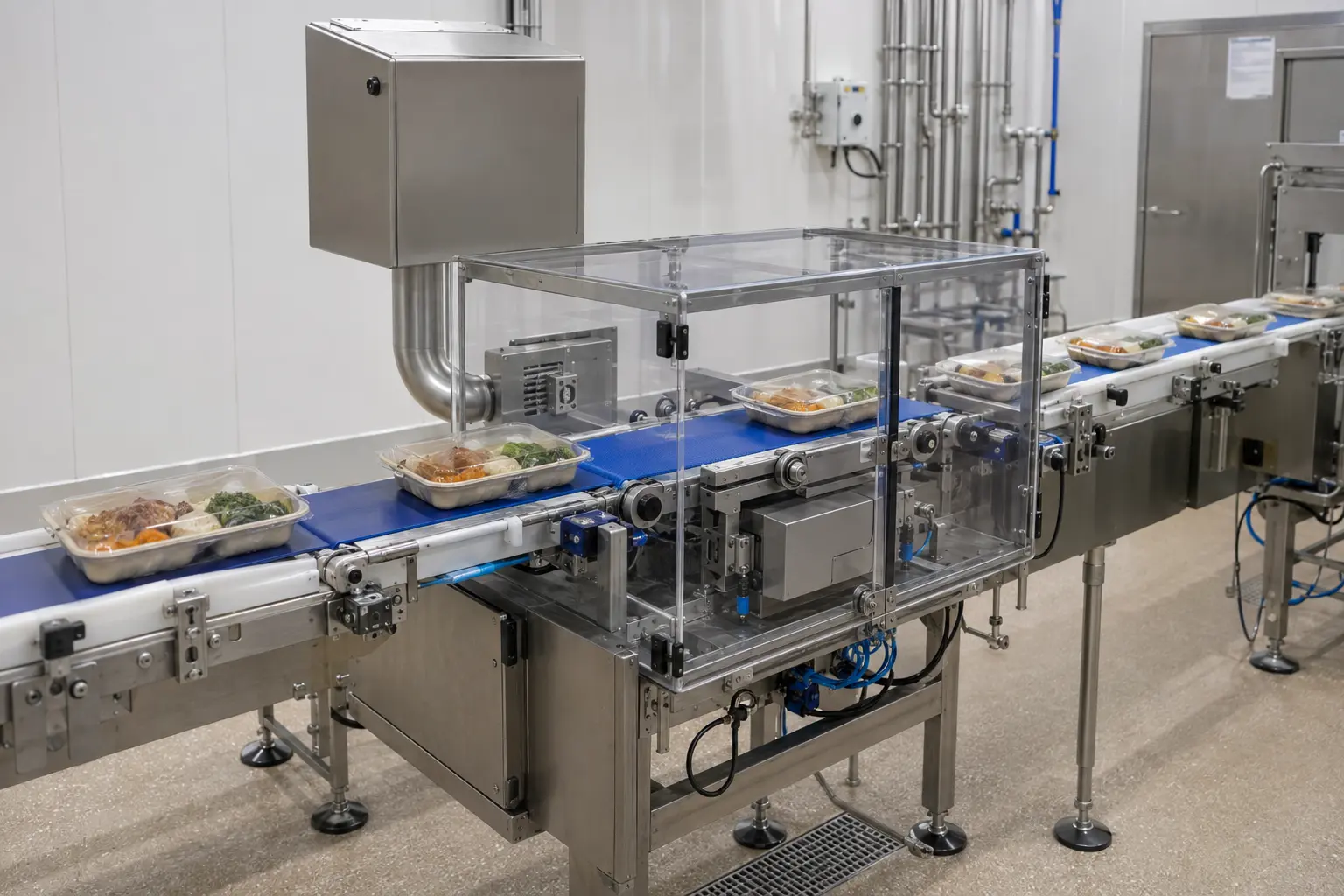
Combine weight with barcode, label and product verification
Weight control may be coordinated with metal detection, label and code inspection, seal checks or other controls, while keeping each inspection purpose distinct.
Discuss integrated inspectionQuestions about food
These answers clarify washdown scope, pack variation, changeover, giveaway control and combined-inspection decisions.
Can a food checkweigher be washed down?
Washdown capability depends on the selected construction, electrical protection, belt system and cleaning method. We specify these details against the actual production area rather than applying one generic hygiene claim.
Can it help reduce product giveaway?
Yes. Average-weight and trend data can reveal overfilling, and optional feedback can make controlled corrections to compatible fillers.
Can one machine run several tray sizes?
Often yes, provided the weight, dimensions, centre of gravity and throughput remain within the machine envelope. Recipes and guided adjustments support changeover.
Can a metal detector be combined with the checkweigher?
Yes. Combination systems place metal detection and dynamic weight inspection in one coordinated line section, with the reject architecture designed around your quality procedure.
Related checkweighing systems
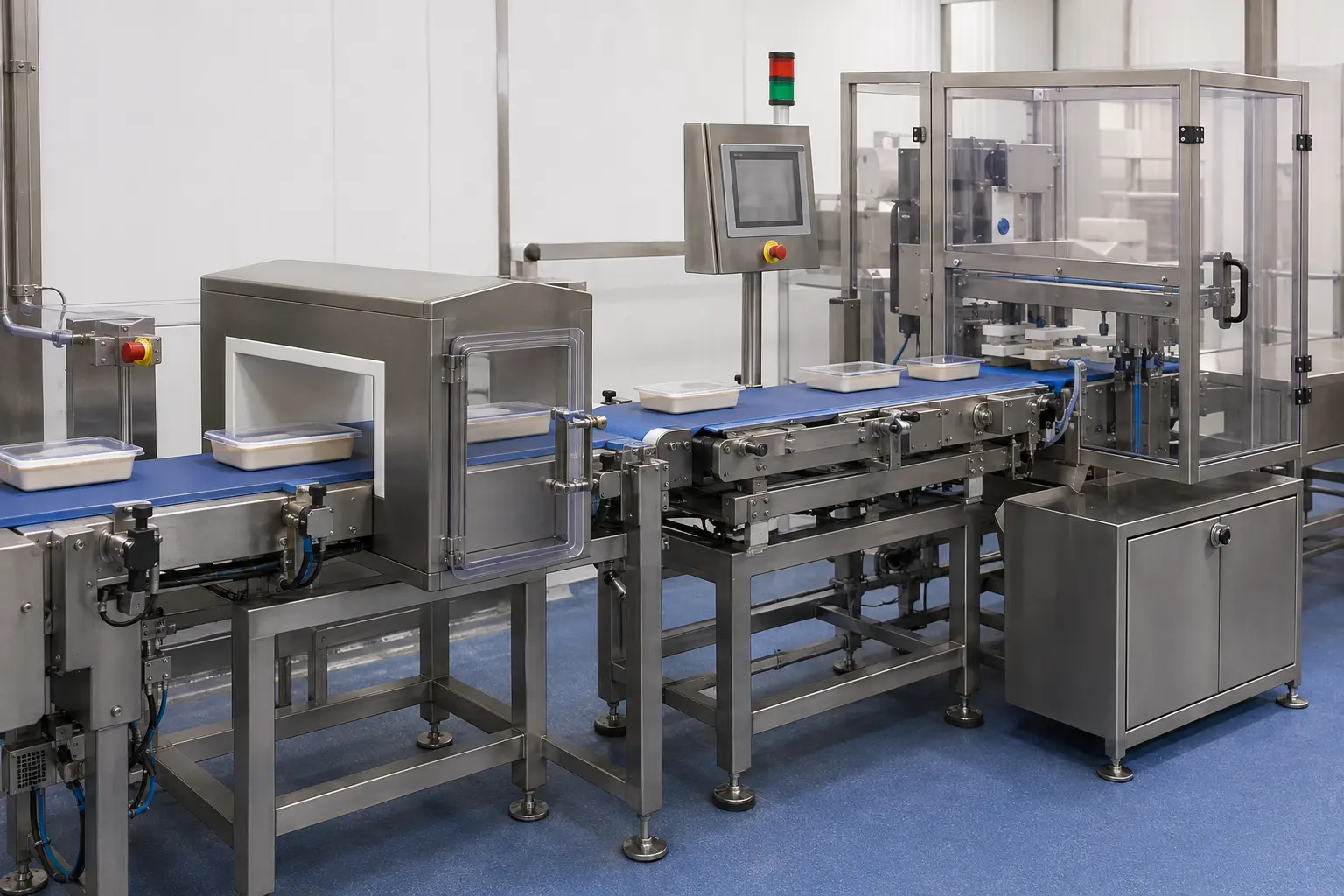
Combination systems
Bring contaminant detection and automatic weight inspection together in a coordinated system. A combination unit can reduce footprint, simplify product transfer and provide a consistent reject and line-control philosophy while keeping the two inspection results distinct.
Explore systemFiller feedback
Turn downstream weight measurements into controlled adjustments at the filler. Rather than reacting to one pack, feedback logic evaluates a defined sample and applies bounded corrections when a genuine process trend is established.
Explore system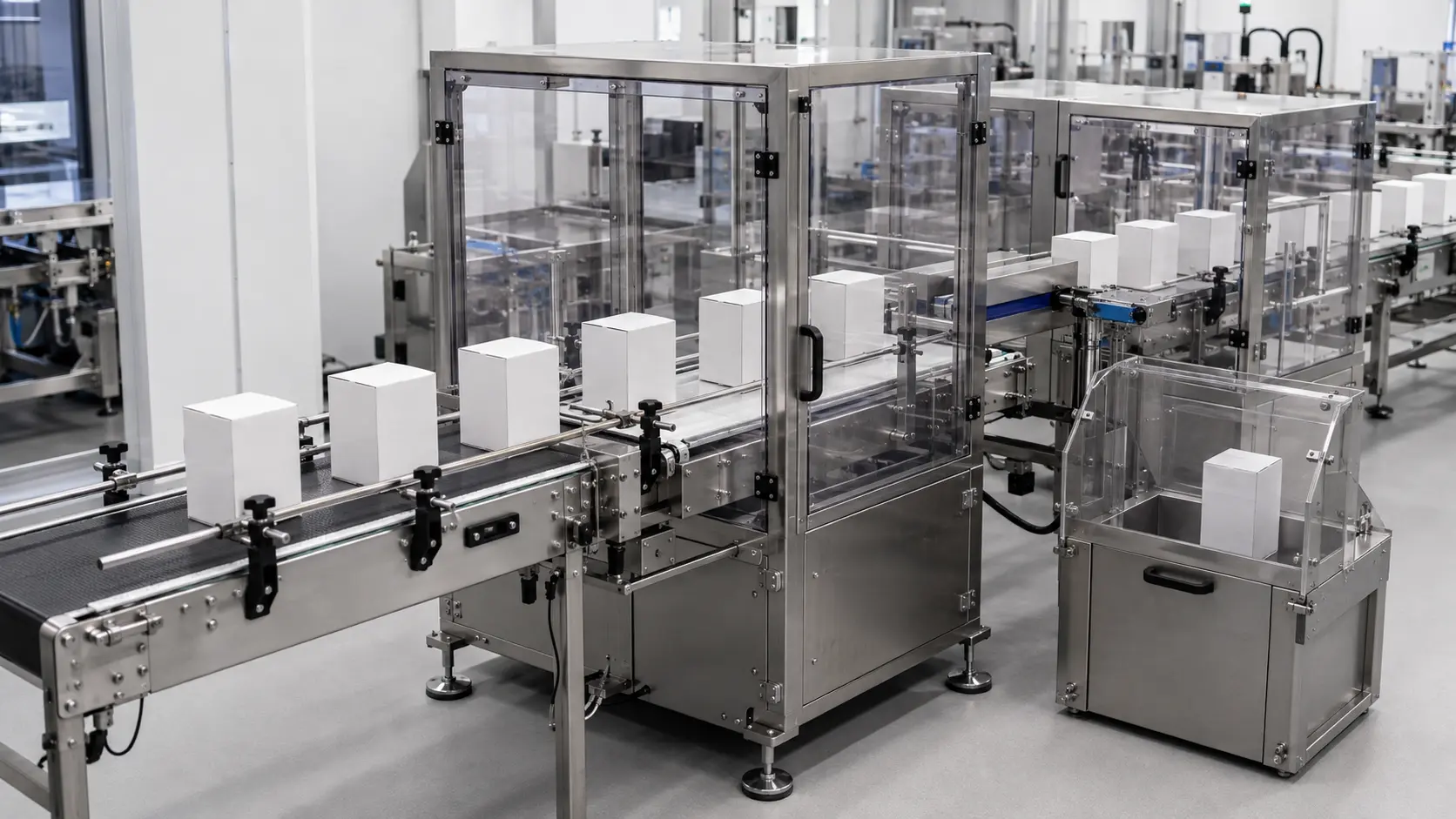
Reject systems
A weight result only protects production when the correct item is removed and its removal is confirmed. We select the reject principle around pack behaviour, throughput, available length and the way your quality team needs to contain and reconcile non-conforming product.
Explore systemRelated checkweigher decisions
Use the next guide that matches the engineering or quality question behind your project.
Let’s specify the checkweigher your line needs.
Share pack details, target weights, line speed and any inspection or data requirements.