Weight and completeness
Dynamic checkweighing identifies packs outside agreed weight limits and can help detect missing components where their mass is reliably greater than normal product and tare variation.
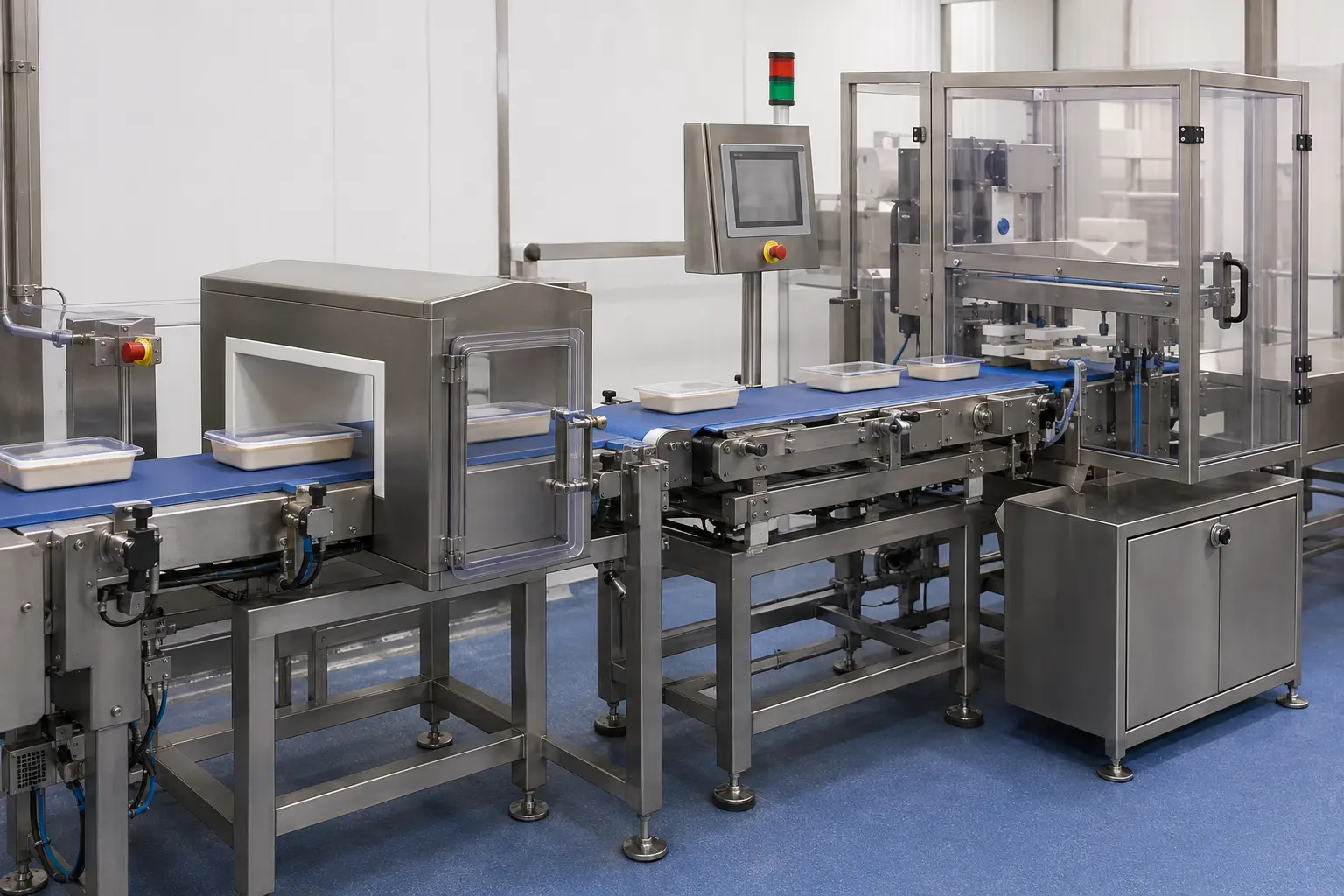
Verify weight, pack identity, readable codes and visible presentation faults as products pass one coordinated inspection point. Oxford Vision Systems designs the handling, sensors, product tracking, rejection and records around your actual quality risks.
Yes. A correctly engineered system can associate weight, camera and code-reader results with the same pack, then pass, reject or stop the line according to agreed rules. Each technology still performs a distinct job: the checkweigher measures mass, barcode readers verify encoded identity, and vision inspects visible features. Combining them creates a more complete final quality decision.
The strongest system does not ask one sensor to infer everything. It assigns each check to the technology best able to prove it at production speed.
Dynamic checkweighing identifies packs outside agreed weight limits and can help detect missing components where their mass is reliably greater than normal product and tare variation.
Readers can check that a required 1D or 2D code is present, readable and matches the product recipe. Code type, position, print quality and line presentation determine the practical arrangement.
Vision can inspect label presence, position, orientation and selected artwork features when the camera view, lighting and acceptable tolerances are defined from representative packs.
OCR or OCV can be assessed for printed dates, lot codes and expected character strings. Reliable inspection depends on controlled print position, contrast, font and a validated sample set.
Cameras can provide the direct visible check for caps, lids, leaflets, inserts or accessories. Weight can add an independent completeness signal where the component mass supports it.
Configured systems can record inspection results against product, recipe, time or batch identifiers. The required fields, retention, access and higher-level interfaces should be agreed before build.
At higher speeds, the engineering challenge is not simply adding cameras. Product spacing, trigger position, conveyor movement and reject timing must preserve identity from first inspection to final disposition.
Guide and space each pack so weight and visible features can be inspected consistently.
Load the correct recipe and associate the product or batch identifier with the inspection.
Measure the moving pack against agreed underweight and overweight limits.
Acquire the required barcode and image views under controlled trigger and lighting conditions.
Combine the defined results while retaining a clear fault reason for operators and quality teams.
Track the failed pack to rejection, confirm the agreed outcome and create the required production evidence.
For bottles and jars, cameras may inspect cap presence, label position or printed codes while the checkweigher monitors gross weight. On carton lines, barcode identity and visible print can complement weight-based completeness checks. Flexible pouches and sachets need controlled presentation so both weighing and image capture remain repeatable.
Pharmaceutical applications may also require formal recipe control, access levels, audit evidence and validation support. These requirements are defined around the customer’s quality system; no single machine feature makes a complete process compliant.
Send a line video, pack samples, artwork and the faults you need to detect. We can assess the practical inspection method and define a testable project scope.
Discuss integrated inspectionClear boundaries help you choose checks that can be proven reliably on your line.
Often yes. The controls can track each inspection result to a shared reject point, provided product spacing and reject timing remain reliable. Separate reject containment may be preferred when your process needs fault segregation or independent verification.
A barcode reader decodes and checks the data carried by a 1D or 2D code. A vision system evaluates defined visible features such as presence, position, orientation, print or closure condition. The same project may use both.
It can be assessed using OCR or OCV, but performance depends on print contrast, font, position, surface, lighting, speed and the range of acceptable characters. Trials with representative production samples are important.
Potentially, when the component weight is clearly separated from normal pack and product variation. If the component is visible, a camera may provide a more direct presence check; using both can add evidence where the risk justifies it.
Depending on the selected controls and interfaces, records may include product and batch identifiers, weight results, inspection status, fault reason, counts, alarms and selected reject images. Required data and retention should be specified at the start.
Use these guides to define handling, rejection, records and dynamic performance before requesting a proposal.
Plan transfers, spacing, controls, guarding, FAT and production SAT.
Plan the line → 02Match removal, confirmation and containment to the pack and fault.
Define rejection → 03Specify useful records, identifiers, reports and system interfaces.
Plan the evidence → 04Judge dynamic weighing performance with your actual pack at line speed.
Define performance →Share pack details, line speed, artwork and the weight, barcode, label or product faults you need to control.